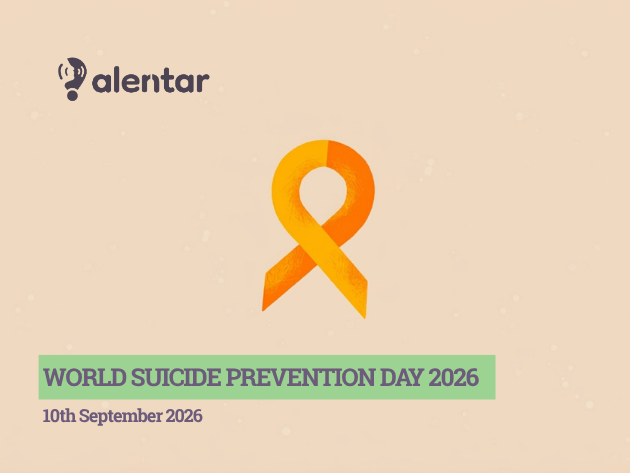
Every year on September 10th, the World Suicide Prevention Day is commemorated. This initiative, promoted by the International Association for Suicide Prevention (IASP) and the World Health Organization (WHO), is strongly committed to raise awareness of suicide as a major public health challenge and to implement preventive actions worldwide.
Suicide is a complex phenomenon caused by several psychological, social, cultural, and healthcare-related factors. The WHO estimates that over 720,000 people die by suicide globally each year, a reality that profoundly impacts families, friends, healthcare professionals, and entire communities. Addressing this problem requires far more than eventually intervening: we must enhance our capacity for early risk factor identification, gain a deeper understanding of the trajectories of vulnerable individuals, and facilitate access to effective interventions.
Prevention also needs creating environments where mental health and suicide can be discussed openly. The topic for World Suicide Prevention Day 2026 — “Changing the Narrative on Suicide” — reminds us that effective prevention demands a fundamental transformation in how we address this issue. Changing the narrative means moving responsibly toward open, rigorous dialogues that reduce stigma and empower individuals in distress to seek help. This involves speaking about suicide without prejudice, actively listening to those who struggle, expanding access to mental health services, and implementing evidence-based strategies.
Changing the narrative also means investing in research
At ALENTAR-J-CM, we contribute to suicide prevention through research in Artificial Intelligence and Large Language Models. Our objective extends beyond generating scientific knowledge; we aim to transfer and apply these advancements directly within the health and social care system.
Technology must serve human needs. We firmly believe this idea. For this reason, our research is committed to safe, responsible development aimed at optimizing care and prevention. Every scientific step represents a new opportunity for earlier detection, more effective intervention, and better support for those in need.
This September 10th, changing the narrative means continuing to investigate, listen, and work together toward prevention.