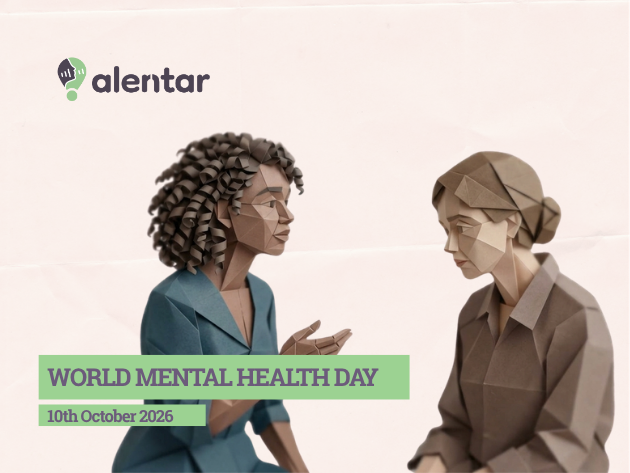
Every 10th October, the World Mental Health Day is celebrated: a date to highlight the importance of taking care of our mental health, combat stigma, and facilitate access to mental health resources and supports.
This year, the World Health Organization (WHO) proposes a particularly relevant message for our times: “Lived experiences heard: real voices, real change”.This call to action is not merely a request for individuals to be heard; it is also an appeal for their experiences and knowledge to actively shape decisions, design policies, programs, and initiatives in mental health prevention and intervention. Ultimately, listening to individuals means establishing a framework of analysis centered on human rights.
Listening is also caring
Talking about mental health means, above all, talking about people, because every experience is unique. The WHO points out that individuals with lived experience contribute with valuable knowledge which cannot be obtained exclusively through clinical practice or research. Involving these individuals makes it possible to further identify needs, barriers, and challenges that might otherwise go unnoticed. For this reason, listening becomes an essential component of effective mental health prevention.
Including adolescents and young people with lived experience carries special significance, as it is during adolescence and youth when the first signs of mental health issues or suicide risk may emerge. In this regard, early detection, understanding mental health risk and protective factors, and facilitating adequate access to professional resources become fundamental in preventing these mental health problems.
Technology at the service of people
In recent years, Artificial Intelligence (AI) has opened new possibilities and research pathways for the early detection of signals, indicators, and behavioral patterns associated with mental health conditions or suicide risk. Additionally, these tools represent an important advancement over traditional methods, offering greater reliability while remaining non-invasive for individuals.
Detecting a sign of distress is not the same as understanding a person’s experience, and understanding their experience is only the first step toward actually caring for them. Therefore, the current challenge is not merely developing more sophisticated AIs, but placing this technological innovation at the service of early, accessible, and personalized care. To achieve this, technology must always place people at the center, and further guarantee people’s privacy, autonomy, equity, and rights.
For this reason, at ALENTAR-J-CM, we view innovation as a tool at the service of people, to better prevent and care. While research and technology can help us identify certain risk mental health indicators, people’s needs, concerns, aspirations, and lived experiences are still the core of our mission. Listening means much more than analyzing words: it means understanding what is behind the speech.
This World Mental Health Day reminds us that listening is not just hearing a voice: it is valuing it, understanding it, and allowing it to transform the way we care for mental health. Because AI can help us detect signals… but listening, understanding, and caring remain, after all, human.