
ABOUT US
Our research team
Committed to youth mental health and suicide prevention
The ALENTAR-J-CM project is supported by an interdisciplinary team of professionals from academic, healthcare, and technological institutions who work together with a shared goal: to advance the prevention of mental health problems and suicidal behavior among young people.
Researchers from the Complutense University of Madrid (UCM), the Technical University of Madrid (UPM), the Fundación Jiménez Díaz, the Hospital Clínico San Carlos, the Hospital Universitario Gregorio Marañón, and the Centro de Psicología Aplicada at the Autonomous University of Madrid (O-CPA-UAM) take part in ALENTAR-J-CM, along with other collaborating centers.

Interdisciplinary team
Our team brings together clinical and psychiatric expertise with technological and analytical development, integrating knowledge in mental health, epidemiology, machine learning, and natural language processing. This synergy makes it possible to approach our mission from an innovative perspective, grounded in scientific evidence and oriented towards the implementation of effective socio-health prevention strategies.
ALENTAR-J-CM CONSORTIUM
TEAM MEMBERS
Principal Investigators
Academic team responsible for the scientific development and direction of the project.
Dr. Alejandro de la Torre

Dr. Alejandro de la Torre Luque is Associate Professor in the Department of Legal Medicine, Psychiatry, and Pathology at UCM. He leads the Psychiatric Epidemiology and Mental Health Research Group (EPISAM) and is an associate researcher at CIBERSAM CB/07/09/0013 (Carlos III Health Institute). He is also a member of the WHO Collaborating Center in Mental Health and coordinator of the National Suicide Prevention Platform. His research focuses on emotional disorders and suicidal behavior in young people, with over 120 publications and an h-index of 35. He has led several projects funded by the Carlos III Health Institute and collaborates in international initiatives such as the Global Consortium for Depression Prevention and the Global Burden of Disease.
Dr. Raúl Lara Cabrera

Dr. Raúl Lara Cabrera is Associate Professor at UPM and the subdirector of Research and Doctoral Studies at the School of Computer Systems Engineering. He is a member of the KNODIS research group and a specialist in machine learning and natural language processing. He has published in leading journals such as Information Fusion and Knowledge-Based Systems and has extensive experience in national and international research projects. He has supervised two doctoral theses in machine learning.
Dr. Enrique Baca García

Dr. Enrique Baca García is a Full Professor of Psychiatry at the Autonomous University of Madrid, and Head of the Fundación Jiménez Díaz’s affiliated hospital psychiatric sections. With more than 300 publications and an h-index of 74, he is an international leader in suicide prevention and digital mental health. He has supervised 56 doctoral theses and mentored numerous researchers through programs such as Marie Skłodowska-Curie and Juan Rodés. A pioneer in data mining in psychiatry since 2006, he has led clinical initiatives such as the Código 100 suicide prevention program and collaborates in international research networks such as CIBERSAM (CB/07/09/0025), the ECNP Suicide Network, and the World Federation of Societies of Biological Psychiatry (WFSBP).
Dr. Marina Díaz Marsá

Dr. Marina Díaz Marsá is a psychiatrist and Associate Professor at UCM, and Head of the Institute of Psychiatry and Mental Health at Hospital Clínico San Carlos, where she coordinates specialized units in eating disorders and early psychosis. With more than 170 scientific publications and over 15 competitive projects led, her research focuses on impulsive behaviors, eating disorders, borderline personality disorder, and suicidal behavior. She has supervised more than 20 doctoral theses and is Vice-President of the Spanish Society of Psychiatry and Mental Health. She is Co-Principal Investigator of CIBERSAM group CB/07/09/0026 (Carlos III Health Institute) and leads the eating disorders research team at the Biomedical Research Foundation of Hospital Clínico San Carlos. Dr. Díaz Marsá also holds leadership roles in national and international scientific societies related to mental health and gender studies.
Dr. María Luisa Barrigón Estévez
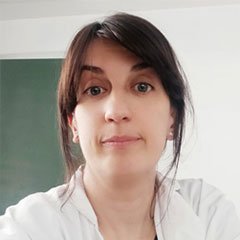
Dr. María Luisa Barrigón Estévez is Head of the Institute of Psychiatry and Mental Health at Hospital Gregorio Marañón and Adjunct Professor at UCM. A specialist in psychiatry with a solid clinical, teaching, and research career, she has published over 90 scientific articles. Her recent research focuses on suicidal behavior, participating in the SURVIVE consortium and leading one of the subprojects funded by the Carlos III Health Institute (PI23/01066).
ALENTAR-J-CM CONSORTIUM
TEAM MEMBERS
Principal Investigators
Academic team responsible for the scientific development and direction of the project.
Dr. Alejandro de la Torre
Dr. Alejandro de la Torre Luque is Associate Professor in the Department of Legal Medicine, Psychiatry, and Pathology at UCM. He leads the Psychiatric Epidemiology and Mental Health Research Group (EPISAM) and is an associate researcher at CIBERSAM CB/07/09/0013 (Carlos III Health Institute). He is also a member of the WHO Collaborating Center in Mental Health and coordinator of the National Suicide Prevention Platform. His research focuses on emotional disorders and suicidal behavior in young people, with over 120 publications and an h-index of 35. He has led several projects funded by the Carlos III Health Institute and collaborates in international initiatives such as the Global Consortium for Depression Prevention and the Global Burden of Disease.
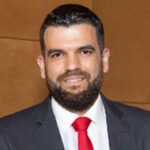
Dr. Raúl Lara Cabrera
Dr. Raúl Lara Cabrera is Associate Professor at UPM and the subdirector of Research and Doctoral Studies at the School of Computer Systems Engineering. He is a member of the KNODIS research group and a specialist in machine learning and natural language processing. He has published in leading journals such as Information Fusion and Knowledge-Based Systems and has extensive experience in national and international research projects. He has supervised two doctoral theses in machine learning.

Dr. Enrique Baca García
Dr. Enrique Baca García is a Full Professor of Psychiatry at the Autonomous University of Madrid, and Head of the Fundación Jiménez Díaz’s affiliated hospital psychiatric sections. With more than 300 publications and an h-index of 74, he is an international leader in suicide prevention and digital mental health. He has supervised 56 doctoral theses and mentored numerous researchers through programs such as Marie Skłodowska-Curie and Juan Rodés. A pioneer in data mining in psychiatry since 2006, he has led clinical initiatives such as the Código 100 suicide prevention program and collaborates in international research networks such as CIBERSAM (CB/07/09/0025), the ECNP Suicide Network, and the World Federation of Societies of Biological Psychiatry (WFSBP).

Dr. Marina Díaz Marsá
Dr. Marina Díaz Marsá is a psychiatrist and Associate Professor at UCM, and Head of the Institute of Psychiatry and Mental Health at Hospital Clínico San Carlos, where she coordinates specialized units in eating disorders and early psychosis. With more than 170 scientific publications and over 15 competitive projects led, her research focuses on impulsive behaviors, eating disorders, borderline personality disorder, and suicidal behavior. She has supervised more than 20 doctoral theses and is Vice-President of the Spanish Society of Psychiatry and Mental Health. She is Co-Principal Investigator of CIBERSAM group CB/07/09/0026 (Carlos III Health Institute) and leads the eating disorders research team at the Biomedical Research Foundation of Hospital Clínico San Carlos. Dr. Díaz Marsá also holds leadership roles in national and international scientific societies related to mental health and gender studies.

Dr. María Luisa Barrigón Estévez
Dr. María Luisa Barrigón Estévez is Head of the Institute of Psychiatry and Mental Health at Hospital Gregorio Marañón and Adjunct Professor at UCM. A specialist in psychiatry with a solid clinical, teaching, and research career, she has published over 90 scientific articles. Her recent research focuses on suicidal behavior, participating in the SURVIVE consortium and leading one of the subprojects funded by the Carlos III Health Institute (PI23/01066).
Research Members
Professionals who carry out the scientific work of the project.

Universidad Complutense de Madrid – UCM
Alejandro de la Torre Luque (IP)
José Manuel Andreu Rodríguez
Francisco José Estupiñá Puig
José Ángel González Prieto
Natalia Lagunas García
Elvira Lara Pérez
María Elena de la Peña Fernández
Pablo Puyol Valda
Biagio Scalingi

Universidad Politécnica de Madrid – UPM – KNOwledge Discovery & Information Systems (KNODIS)
Raúl Lara Cabrera (IP)
Gema Bello Orgaz
Alberto Díaz Álvarez
Jorge Dueñas Lerín
Félix José Fuentes Hurtado
Abraham Gutiérrez Rodríguez
Guillermo Iglesias Hernández
María Navas Loro
Fernando Ortega Requena
Cristian Ramírez Atencia
Fundación Jiménez Díaz
Enrique Baca García (IP)
Carmen Artes de las Heras
Marcos Díez Maestre
Beatriz Garrido Barranco
Laura Mata Iturralde
Rocío Navarro Jiménez
Santiago Ovejero García

Hospital Clínico San Carlos
Marina Díaz Marsá (IP)
Íñigo Alberdi Páramo
Wala Ayad Ahmed
José Luis Carrasco Perera
Fátima Castellanos Valverde
María Dolores Saiz López
María Lucía Schio Pomiés

Hospital Universitario Gregorio Marañón
María Luisa Barrigón Estévez (IP)
Carmen Burgos Roldán
Juan José Carballo Belloso
Irene Pérez Guerrero
Mercedes Valtueña García
UAM – Observatorio del Centro de Psicología Aplicada de la Universidad Autónoma de Madrid (O-CPA-UAM)
Sandra Arranz Paraíso (IP)
Ángela Barrios Fernández
Ruth Campos García
Iván Chamizo Sánchez
Beatriz Gutiérrez Izquierdo
Eva Medina Moral
Irene Serrano Blaya

Otros/as investigadores/as asociados/as
Sandra Doval Moreno (UNIR)
Elizabeth Suárez Soto (Universidad Internacional de Valencia – VIU)
FAQ
About the project
Mental health problems among adolescents and young adults are one of the most current concerns in Spanish society. Suicide is also among the top three causes of external mortality in this population. Our mission is to prevent and reduce these problems by developing advanced software based on Natural Language Processing (NLP).
Current social demands and challenges require researchers and mental health professionals to adopt preventive approaches. Prevention helps reduce the onset of emotional problems and suicide risk, but also supports early intervention when problems are already present and reduces recurrence. Ultimately, prevention improves quality of life and reduces healthcare costs.
Clinical professionals, such as psychologists, psychiatrists, neurologists, will be able to use our prototype as a decision-support tool for diagnosing emotional problems and suicide risk. In the long term, healthcare services will strengthen their capacity and effectiveness in treating patients.
This project brings together several research centers and social organizations committed to youth mental health.
The scientific and technological teams include the Complutense University of Madrid (UCM), the Technical University of Madrid (UPM), and the Autonomous University of Madrid (UAM). These universities lead the research work and the development of advanced computational models.
Clinical research is conducted by hospitals within ALENTAR-J-CM: Hospital Universitario Gregorio Marañón, Hospital Clínico San Carlos, and Fundación Jiménez Díaz’s associated hospitals.
Social partners, such as Teléfono de la Esperanza and FAD Juventud, collaborate by providing support, guidance and data resources.
Participation, data and privacy
All data come from field studies conducted in educational centers and hospitals.
We collect quantitative and qualitative data from self-reported questionnaires, audio recordings from voice-based experimental tasks, medical records and clinical session transcripts.
ALENTAR-J-CM project fully complies with the Declaration of Helsinki, Good Clinical Practice standards, Biomedical Research Act 14/2007, Organic Law 3/2018, and the EU GDPR (Regulation 2016/679).
All data are anonymized to prevent identification. Only authorized project researchers can access the data, under strict supervision by the Principal Investigator.
This four-year project will be developed until 31 December 2028. We are currently transitioning from Phase 1 (model training with existing data) to Phase 2 (field studies).
Participants must be 12 to 25 years of age, live in the Community of Madrid, have functional proficiency in Spanish and provide informed consent (with parental consent for minors).
Your participation will consist of two activities. First, you will fulfill an online questionnaire on sociodemographic and mental health aspects. Second, you will participate in an experimental task involving a narration of different emotional memories and a brief interview. This second activity will be audio recorded solely for research purposes.
The total estimated duration of both activities will be one hour, approximately. This duration may vary depending on participants.
Yes, you may withdraw or request data deletion at any time by emailing contacto@proyectoalentar.org with a copy of your ID or other similar documentation.
Research findings will be published in scientific journals or research reports using aggregated data only. No individual results will ever be published.
Access to the results
ALENTAR-J-CM research team is developing an advanced software capable of analysing spoken language to estimate risk of emotional problems and suicide in adolescents and young adults. This prototype will assess speech and voice markers, such as prosody, tone, or linguistic content, and Natural Language Processing (NLP) and Large Language Models trained with field study data will be trained for the prototype’s development. In a final stage, this prototype will be proven in real-world clinical settings.
The software prototype will be used exclusively for research purposes and will not be commercially distributed.
Please contact us at contacto@proyectoalentar.org to express your interest. We appreciate collaborations from Secondary Education schools located in the Community of Madrid to participate in field studies. In addition, social entities and healthcare settings are kindly welcomed to collaborate in supporting and advising regarding the prototype adaptation in real-world settings.
Every step matters.
Let’s join efforts to support emotional well-being in our society.


This website is supported by the Dirección General de Investigación e Innovación Tecnológica de la Comunidad de Madrid (Orden 3177/2024) through the I+D Technological activities program (TEC-2024/COM-224) and the European Regional Development Fund (ERDF)